



GSM 900, GSM-R, GSM 850, GSM 1800, GSM 1900, UTMS, LTE, Omni directional Antennas, Directional Antennas, Indoor Single-/ Broad-/ Multi-/ Triple-Band-/ quad-Band Antennas, antenna, directional, dual-band, tri-band, quad-band, 4-band, yagi, logarithmic, panel, high gain, wireless, wi-fi, wifi, high-frequency directional antenna, GSM antenna, antenna umts, lte antenna, mimo antenna, mime antenna,3g antenna, 4g antenna, log-periodic antenna umts gsm antenna for highway tunnels, galleries antenna, antenna quad-band lte-gsm-dcs-UMTS, quad-band antenna lte-900-1800-2170 MHz antenna lte-gsm-dcs-umts, lte antenna 900-1800-2170 MHz dual-band antenna lte - gsm-dcs-umts, lte dual band antenna 900-1800-2170 MHz

AR1030XZ Yagi antenna 2400÷2500 MHz Gain 18 dBi WIRELESS
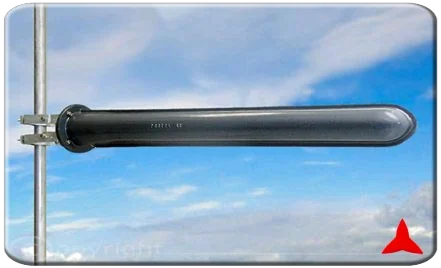
High gain directional antenna for 2400 MHz Wireless Band with radome, sturdy, low air resistance. Especially suitable for point-to-point con- nection, tunnels coverage, highways.
|

ARB9210 Yagi antenna 2300÷2600 MHz Gain 10 dBi +/- 45° MIMO 2 CONNECTORS WIRELESS
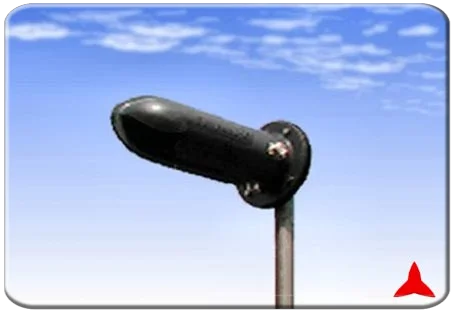
BROADBAND SPECIAL DIRECTIONAL ANTENNAS TYPE ARB9210
Directional antennas with double independent feeding and possibility of using both polarization at the same time, especially suitable for tunnels coverage.
|
ARB91816.1 Yagi antenna 2300÷2690 MHz Gain 16 dBi +/- 45° MIMO 2 CONNECTORS WIRWLESS
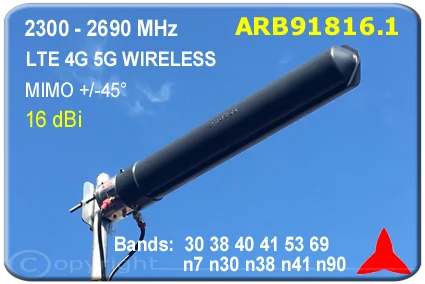
BROADBAND SPECIAL DIRECTIONAL ANTENNAS TYPE ARB91816
Directional antenna with high gain broadband 5G-4G-LTE-IMT‑E-WCS-MMDS-WIRELESS BAND-30-38-40-41-53-69-n7-n30-n38-n41-n90-2300÷2700 MHz with +/-45° polarization. All parts of the antenna are electrically grounded. Specially used for radio coverage in motorway, railway, underground tunnels and point to point radio link. Suitable for MIMO systems.
|
ARB92417.1 Yagi antenna 2300÷2690 MHz Gain 18 dBi +/- 45° MIMO 2 CONNECTORS WIRELESS
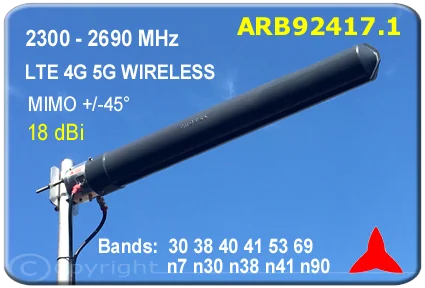
BROADBAND SPECIAL DIRECTIONAL ANTENNAS TYPE ARB92417
Directional antenna with high gain broadband 5G-4G-LTE-IMT‑E-WCS-MMDS-WIRELESS BAND-30-38-40-41-53-69-n7-n30-n38-n41-n90-2300÷2700 MHz with +/-45° polarization. All parts of the antenna are electrically grounded. Specially used for radio coverage in motorway, railway, underground tunnels and point to point radio link. Suitable for MIMO systems.
|
AR1031.1 Log Periodic antenna 700÷960 MHz 1710÷2700 MHz Gain 900 MHz 7 dBi Gain 1800 MHz 8 dBi Gain 2100 MHz 9.5 dBi LTE - GSM 900 - GSM-R GSM1800 - UMTS - WI-FI
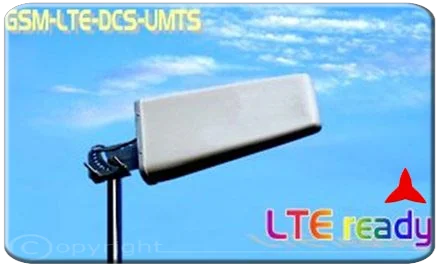
CELLULAR ANTENNA
Logarithmic broadband antenna to be used for LTE/GSM/DCS/UMTS/WIRELESS services. For microcells and repeaters. The fiberglass radome allows to use the antenna even in severe weather conditions.
|
ARO68913.2XZ 850÷3000 MHz Gain 3.5 dBi ULTRA WIDEBAND micro repeaters anti-drone jammers and anti-interception systems
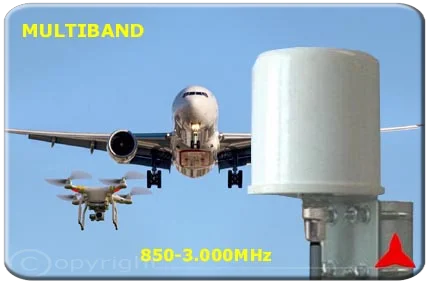
MULTIBAND ANTENNA
Omnidirectional MULTIBAND antenna for frequencies 850 ÷ 3000 MHz for fixed or mobile uses, in combination with radio-modems, micro repeaters, anti-drone jammers and anti-interception systems.
Fiberglass protection radome.
|
ARP689417XZ Panel antenna 870÷960 MHz 1710÷2500 MHz Gain 7 dBi Gain 10 dBi GSM 900 - GSM-R GSM1800 - UMTS - WI-FI
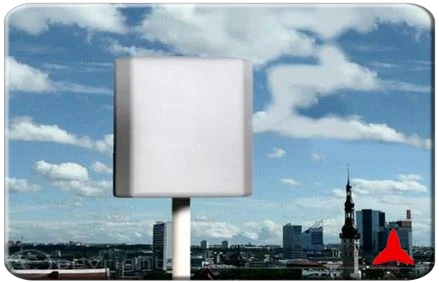
CELLULAR ANTENNA
Directional MULTI-BAND panel antenna especially suitable for simultaneous GSM-DCS-UMTS-WIRELESS-LTE application in the 900/1710/2700 MHz bands. Bracket for wall or pole internal installation included.
|
ARO589XZ Omni antenna 700÷960 MHz 1710÷2700 MHz 3300÷3800 MHz Gain 3/4.5 dBi GSM 2G 3G 4G 5G WI-FI
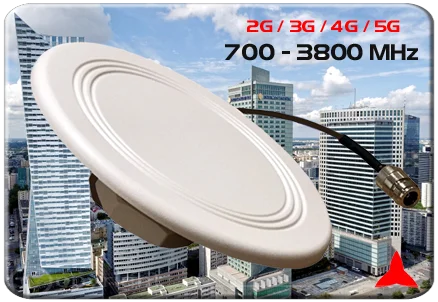
CELLULAR ANTENNA
Low profile indoor omnidirectional antenna. Designed to operate in all 2G/3G/4G/5G and wi-fi telephone bands. The thickness of only 8 mm, makes the antenna perfectly usable in all those situations where it is necessary to mask the broadcast antennas as much as possible within residential or hospitality structures.
|
ARW100 Special fixing bracket Tunnel - High Speed
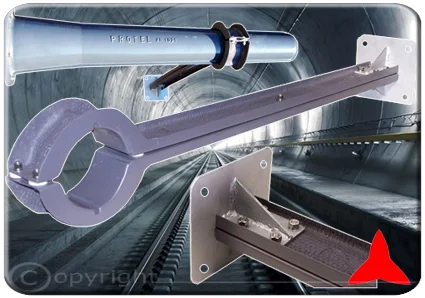
Mounting support, designed for installations in railway tunnels or in underground lines with high-speed trains. It can also be used in situations where the antenna must remain immune to accidental displacements or oscillations. Clamp made of fiberglass reinforced also in the fireproof version that does not compromise the electrical characteristics and the radiation pattern of the antenna on which it is mounted.
|

antenna, direttiva, direzionale,bi-banda,tri-banda,quadri-banda,4 banda, yagi, logaritmica, pannello, alto guadagno, wireless, wi-fi, wifi, alta frequenza, antenna direzionale, antenna gsm, antenna umts, antenna lte, antenna mimo, antenna 3g, antenna 4g, antenna log-periodica gsm umts, antenna per tunnel autostradali, antenna per gallerie, antenna quadri-banda lte-gsm-dcs-umts,antenna quadri-banda lte-900-1800-2170 MHz,antenna lte-gsm-dcs-umts, antenna lte-900-1800-2170 MHz, antenna bi-banda lte-gsm-dcs-umts, antenna bi-banda lte-900-1800-2170 MHz