


Dual-Band R.F. Antennas 1710-2170 MHz for DCS / UMTS, LTE/5G & FRMCS

Designed and manufactured in Italy. This catalogue groups Protel dual-band and broadband directional antennas operating across 1710–2170 MHz for DCS 1800 / UMTS 2100, modern LTE/5G services and FRMCS applications.
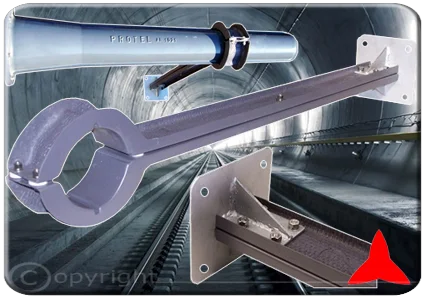
Developed for tunnel and underground coverage: road and motorway tunnels, railway tunnels, metro tunnels, stations, depots, underground car parks, technical galleries and utility tunnels. Selected models are available with a flame retardant fiberglass radome and dedicated fixing solutions for demanding installations.
AR1053 MIMO Yagi antenna 1710÷2170MHz Gain 19 dBi FRMCS DCS LTE UMTS 5G

|

AR1043 MIMO Yagi antenna 1710÷2170MHz Gain 16 dBi FRMCS DCS LTE UMTS 5G

|
AR1035 Yagi antenna 1710÷2170MHz Gain 20 dBi GSM1800 - LTE - UMTS

|
AR1024B Yagi antenna 1710÷2170MHz Gain 17 dBi GSM1800 - LTE - UMTS

|
AR1041.1.YQ Yagi antenna 1710÷2170MHz Gain 15 dBi +/- 45° 2 CONNECTORS MIMO GSM1800 - DCS - LTE - UMTS

MIMO
The strong protective cover in fiberglass, making it suitable even for difficult climatic conditions
|
|
The 1710–2170 MHz range is widely used worldwide for mobile and private networks. It typically covers DCS 1800 / LTE Band 3 deployments, UMTS 2100 services, and a large portion of mid-band LTE/5G solutions. For rail environments, the same spectrum range is often considered within planning scenarios for FRMCS-related deployments and migration paths, depending on national strategies and operators’ network architecture.
Protel specializes in antennas engineered for underground propagation challenges: long corridors, reflections, narrow sections, portals and curves. Typical applications include: motorway and urban road tunnels, railway tunnels (mainline, high-speed, service tunnels), metro tunnels and underground stations, parking facilities, hydropower plants, dams, technical basements, maintenance rooms, logistics areas, hospitals, offices and residential buildings.
In repeaters and DAS architectures, Protel antennas are commonly used as donor antennas (outdoor or portal-facing) to feed the system, and as dedicated antennas to support indoor / underground coverage. Depending on the layout, choose directional high-gain solutions (Yagi or log-periodic) to maximize link budget, or compact directional solutions where controlled illumination and footprint are required.
For a broader overview of this frequency range and its main tunnel / underground applications, see the technical insight on 1710–2170 MHz mobile and dual-band antennas for LTE / UMTS, 4G, 5G and professional services .

Frequently asked questions about 1710–2170 MHz antennas
Quick answers to the most common questions about Protel antennas used for DCS 1800 / UMTS 2100, LTE/5G and FRMCS-related underground coverage.
Which services are typically covered in the 1710–2170 MHz range?
Are these antennas suitable for tunnels and underground environments?
What is the role of a donor antenna in repeater and DAS systems?
Which antenna type should I choose: Yagi, log-periodic, or compact directional?
Do you offer radome protections for harsh environments?
Are MIMO / cross-polarized solutions available?
Can you support demanding railway tunnel installations?
Related topics and searches
Typical queries and applications related to the 1710–2170 MHz antenna range and similar Protel R.F. antennas:
1710-2170 MHz tunnel antennas DCS 1800 donor antenna UMTS 2100 repeater antenna LTE Band 3 yagi antenna MIMO +/-45 antenna 1800/2100 FRMCS tunnel coverage antennas railway tunnel radio coverage metro tunnels and underground stations DAS underground car park indoor coverage utility tunnels and technical galleries coverage flame retardant fiberglass radome donor antenna for repeater and DAS