Go to content

RF Filters & Components 660-3800 MHz for LTE 4G, 5G, GSM and Wireless Systems - Protel Antennas - Professional Antennas for Telecomunications

Protel Antennas 38 years - 2026
Logo Protel antennas
PROFESSIONAL ANTENNAS
FOR TELECOMMUNICATIONS
SELECT THE FREQUENCY BAND
Skip menu
SELECT THE FREQUENCY BAND
Skip menu

RF Filters & Components 660-3800 MHz for LTE 4G, 5G, GSM and Wireless Systems

RF FILTERS & PASSIVE COMPONENTS 780–6000 MHz for multi-service cellular and wireless systems: combiners, splitters/dividers, couplers and filtering blocks engineered to optimize DAS and repeater front-ends in complex RF sites, including road, motorway, railway and metro tunnel infrastructures.

MC1030W/RN 870÷970 2400÷2500MHz

MC1030W/RN COMBINING FILTERS   GSM-DCS-UMTS-WIRELESS 870-970MHz  2400-2500MHz
Combining filter specifically studied to com- bine the GSM 900 and WIRELESS 2.4 GHz signals on the same system. Great isolation, linearity on all the working band and sturdi- ness made of this product the necessary choice for those who need to do a radioelec- tric covering without passing other cables.

GPS-LNA8 1558÷1605.89 MHz GPS signal distributor
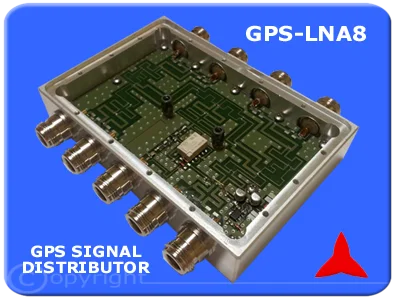
GPS-LNA8 GPS GLONASS GALILEO signal distributor
Amplified GPS / GLONASS / GALILEO signal distributor / splitter. Each input is filtered and amplified. The device is also able to power itself via one of the eight N output connectors. It can directly supply power to the external GPS-PR1 antenna via the same coaxial connectors. The device is also available in the 19”-1U rack version.

MI689 780÷960 1710÷2170MHz

MI689 COMBINING FILTERS   GSM-DCS-UMTS 780-960MHz  1710-2170MHz
Combining filter for GSM-DCS-UMTS frequen- cies. The principal technical features of the filter, other than the mechanical sturdiness, are the very good linearity and isolation with a low value of return loss.

MOD. RIP.W 700÷2700 MHz

Rip2  2 way Rip3 3 way Rip4  4 way Broadband Splitter 800-2500MHz
Broadband splitters to be used as antenna’s combiner or distribution splitter in cabled systems. Small, light and low cost, the splitters can be installed directly on mast with a lock ring (not supplied) or on wall using the existing holes.

ARAD.1 -5/7/10/12/15dB 700÷2700 MHz Directional Couplers

Arad5 Arad 10 Arad 15 Directional Couplers 800-2500 MHz BROADBAND -5/-10/-15 dB
Directional Couplers with adjustable outputs to be employed in the distribution of signals or for withdrawal of radiofrequency in antennas’ systems. Excellent linearity and isolation are, with a low value of return loss, and mechanical solidity, the principal features of this line of products

ARDCB - N 10÷3000 MHz coaxial DC BLOCK

coaxial DC BLOCK 10-3000 Mhz mod. ARDCB -N Protel
The coaxial DC BLOCK allows to block the voltage on a coaxial line.
particularly suitable for mobile telephony applications. Working frequency 10÷3000 Mhz

Why RF filters and components matter in multi-band systems

In modern multi-band infrastructures, performance is determined not only by antennas but also by the quality of the RF chain. Filters, combiners, splitters/dividers and couplers are used to build predictable architectures, improve selectivity and control how multiple services share the same distribution network.

Typical applications

  • DAS and repeaters: front-end conditioning, band separation and stable multi-technology operation (GSM/2G, UMTS/3G, LTE/4G and 5G sub-6 where applicable).
  • Tunnel systems: road tunnels, motorway tunnels, railway tunnels and metro lines where controlled distribution and isolation are essential to maintain service continuity and limit unwanted coupling.
  • Complex RF sites: shared infrastructures, indoor coverage projects and installations requiring clean routing, stable impedance matching and robust RF handling.

Focus on 2300–2700 MHz (beyond mobile telephony)

The 2300–2700 MHz range is widely relevant worldwide: besides cellular allocations adopted in many markets, it includes the 2.4 GHz WLAN/Wi-Fi ecosystem used for wireless data links, local connectivity and monitoring/data services in industrial and public infrastructures. Depending on national frequency plans, the same range can also be used for fixed wireless access and private networks. RF components in this segment help control interference, improve isolation and support multi-service distribution without additional cabling.

How to select the right building block

  • Filtering: band-pass / notch functions to protect receivers and improve selectivity in dense RF environments.
  • Combining: multi-band routing with high isolation between ports to keep channels clean and stable.
  • Distribution: splitters/dividers and couplers for consistent level planning across multiple branches and antennas.

Use the product list on this catalog page to choose the most suitable component for your band plan and system architecture.

Protel Antennas - Made in Italy

Frequently asked questions about RF filters and components 780-6000 MHz

Quick answers for selecting combiners, splitters/dividers, couplers and filtering blocks in multi-band LTE/4G, 5G sub-6 and wireless systems.

What is the difference between a combiner and a splitter?
A combiner merges multiple RF inputs into one path with high isolation between ports, while a splitter/power divider distributes one signal to multiple outputs with controlled losses and matching.
When should I use band-pass or notch filters?
Band-pass filters select a desired band and reject out-of-band energy. Notch filters suppress specific interferers or unwanted services that can reduce receiver linearity and degrade system stability.
Why are RF components critical in tunnels and DAS systems?
In tunnels and confined infrastructures, controlled combining and distribution help maintain isolation and predictable coverage, limiting unwanted coupling and improving continuity across multi-service RF chains.
Which services typically use 2300-2700 MHz besides mobile networks?
Depending on the country, this range can support fixed wireless access and private networks, and includes 2.4 GHz WLAN/Wi-Fi applications. RF components help control interference and isolate services in shared infrastructures.
Which parameters should I check when selecting a component?
Typical key parameters include frequency range, isolation, insertion loss, return loss/VSWR, power handling and connector type, to match the band plan and the intended architecture.

Related topics and searches

Typical queries and applications related to RF filters and passive components 780-6000 MHz:

RF combiner 4G 5G diplexer duplexer triplexer band-pass notch filters power splitter divider directional coupler hybrid coupler DAS repeater RF components tunnel radio distribution 2300-2700 MHz Wi-Fi WiMAX LTE 2600 5G sub-6 filters 5100-5850 MHz WLAN filters
VISIT "ANTENNAKIT" – BEST QUALITY – LOWER PRICE – CLICK BELOW
CONTACT
COMPANY
NEW
OTHER APPLICATIONS
PROTEL Antennas Via Magellano 3 A/B 6
20090 CESANO BOSCONE (MILANO) ITALY
Phone+39.02.48600265 Fax+39.02.48600871
P.I. 09497700154 REA 126350
Copyright PROTEL
1988-2026 All Rights Reserved
Back to content