


Latest Products – Mobile antennas 700–2700 MHz for LTE, GSM, GSM-R, DCS and UMTS

NEW PRODUCTS – MOBILE ANTENNAS 700–2700 MHz
Latest Protel antennas for mobile communications across 700–2700 MHz, covering typical LTE/GSM/GSM-R/DCS/UMTS service layers and 2G/3G/4G/5G deployments (according to local frequency plans).
This catalogue highlights directional and omnidirectional solutions (log-periodic/logarithmic, Yagi, panel and broadband omni), including tunnel-oriented designs and MIMO/dual-polarization options.
|

AR1053 MIMO Yagi antenna 1710÷2170MHz Gain 19 dBi FRMCS DCS LTE UMTS 5G

|
AR1043 MIMO Yagi antenna 1710÷2170MHz Gain 16 dBi FRMCS DCS LTE UMTS 5G

|
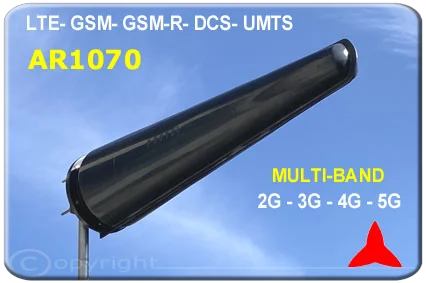
AR1033 Yagi antenna 750÷960 MHz 1710÷2170 MHz 2 CONNECTORS Pol. +/- 45° 16 dBi - 18 dBi - 19.5 dBi LTE - GSM 900 - GSM-R GSM1800 - UMTS
|
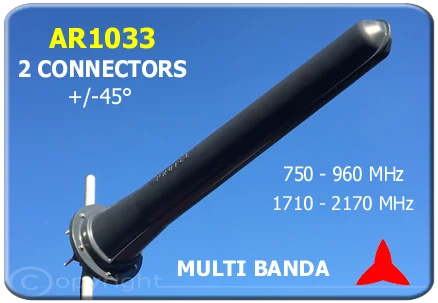
AR1038 Yagi antenna 750÷960 MHz 1710÷2170 MHz 2 CONNECTORS Pol. +/- 45° 12.5dBi - 14.5dBi - 16.5dBi LTE - GSM 900 - GSM-R GSM1800 - UMTS
|
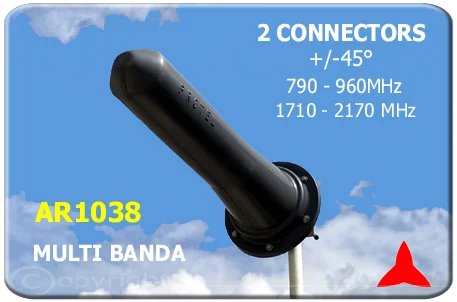
ARB91816.1 Yagi antenna 2300÷2690 MHz Gain 16 dBi +/- 45° MIMO 2 CONNECTORS WIRWLESS
|
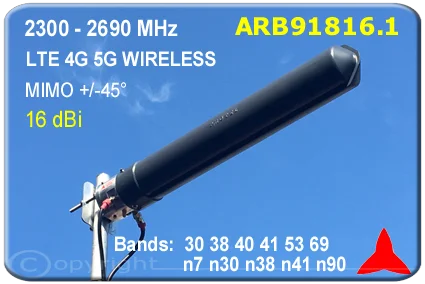
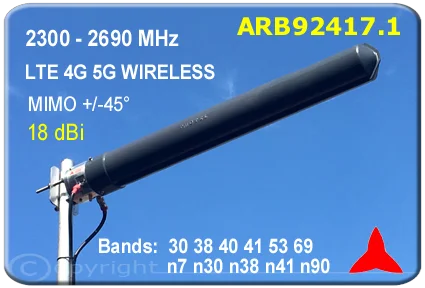
ARB92417.1 Yagi antenna 2300÷2690 MHz Gain 18 dBi +/- 45° MIMO 2 CONNECTORS WIRELESS
|
ARP700XZ 790÷960MHz 1710÷2700 MHz Gain 9.5 - 12 dBi LTE - GSM 900 - GSM-R GSM1800 - UMTS - WI-FI

|
ARPX629 860÷960 MHz Gain 9 dBi

|
AR1045.1 Log Periodic antenna 690÷2700 MHz Gain 12.5 dBi LTE - GSM 900 - GSM-R GSM1800 - DCS - UMTS - WI-FI

|
ARO1037 690÷2700 MHz OMNIDIRECTIONAL BROADBAND ANTENNA LTE GSM GSM-R DCS1800 UMTS 5G WI-FI

|
AR1050 695÷915 MHz Gain 13 dBi

|
AR1051 695÷915 MHz Gain 15 dBi

|
AR1040 790÷960 MHz Gain 16 dBi +/- 45° 2 CONNECTORS MIMO LTE - GSM 900 - GSM-R

|
AR1014 790÷960 MHz Gain 13 dBi +/- 45° 2 CONNECTORS MIMO

|
AR1032 790÷960 MHz 1710÷2170 MHz Gain 900 MHz 16 dBi Gain 1800 MHz 18 dBi Gain 2000 MHz 19.5 dBi LTE - GSM 900 - GSM-R GSM1800 - UMTS Multi / quad-Band antenna

|
AR1041.1.YQ 1710÷2170MHz Gain 15 dBi +/- 45° 2 CONNECTORS MIMO GSM1800-DCS-LTE-UMTS MULTI BAND ANTENNA

MIMO
|
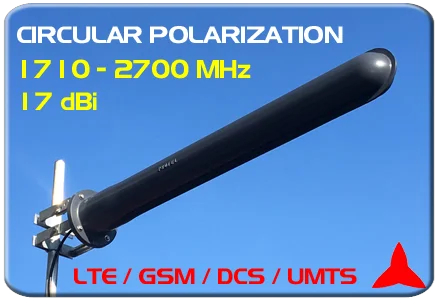
AR1061 1710÷2700 MHz Gain 17 dBi
|
AR1060.1 690÷960 MHz Gain 17 dBi

|
AR1015 790÷960 MHz Gain 11 dBi

|
ARP689416XZ Panel antenna 690÷960 MHz 1710÷2700 MHz Gain 7/8 dBi 2G - 3G - 4G - 5G - Wi-Fi

|
AR1036.Z 770÷960 MHz Gain 10 dBi Yagi antenna Low Profile LTE - GSM 900 - GSM-R

Suitable on BTS, repeaters and micro-repeaters applications similar to a television receiving antenna, recommended where the camouflage is important
|
ARO589XZ Omni antenna 700÷960 MHz 1710÷2700 MHz 3300÷3800 MHz Gain 3/4.5 dBi GSM 2G 3G 4G 5G WI-FI

|
HANDHELD INTERFERENCE FINDER ARK102XZ 750÷1000MHz Gain 35 dBi Measurement and monitoring

|
HANDHELD INTERFERENCE FINDER ARK103XZ 1350÷2200 MHz Gain 30 dBi Measurement and monitoring

|
HANDHELD INTERFERENCE FINDER ARK104XZ 695÷915MHz Gain 35 dBi Measurement and monitoring

|
How to read this “New Products” mobile antenna catalogue. The 700–2700 MHz window is where most modern mobile networks concentrate coverage and capacity layers: low bands (around 700/800/900 MHz) are typically used for wide-area and in-building reach, while mid bands (around 1800/2100/2300–2700 MHz) are widely used for capacity, sectorization and high-traffic areas. As a result, this range is common in operator networks, private mobile systems and infrastructure coverage projects.
Bands, uses and services. Within 700–2700 MHz you typically encounter LTE/4G and 5G layers (low/mid bands), GSM services (including GSM-R in the 900 MHz area where applicable), DCS/GSM1800 and UMTS/3G around 2100 MHz. This makes the catalogue relevant for coverage planning, field deployments, upgrades/refarming scenarios and multi-service sites where more than one band must be handled with predictable radiation behavior.
Typologies and deployment scenarios. Depending on the target environment, you can select directional families (Yagi, log-periodic/logarithmic, panel) to shape coverage along corridors and infrastructure lines, or omnidirectional solutions for 360° service distribution. Several models are oriented to demanding use cases such as railway, motorway and underground tunnels, where robustness and controlled patterns matter for repeatable radio coverage.
Practical engineering options (featured on selected models). The new-product list includes solutions with MIMO and dual polarization (including ±45° cross-polarized variants and dual-connector designs), plus protective radomes (including fiberglass covers and flame-retardant options on selected models) and DC-grounded structures for resilient field operation. These choices support modern cellular architectures and help in harsh installations.
Antennas designed and manufactured in Italy.

Frequently asked questions about new mobile antennas (700–2700 MHz)
Quick answers for selecting antenna families and understanding typical services within the 700–2700 MHz window.
What is included in this New Products catalogue?
Which services are typically addressed in 700–2700 MHz?
Which antenna type should I choose: Yagi, log-periodic/logarithmic, panel or omni?
Do you offer MIMO and dual-polarization options?
Are there solutions suitable for tunnels and harsh environments?
Related topics and searches
Typical queries related to 700–2700 MHz mobile antennas and new product releases:
new mobile antennas 700–2700 MHz LTE GSM GSM-R DCS UMTS antenna catalogue MIMO ±45° dual polarization tunnel antenna log-periodic wideband antenna 690–2700 Yagi antenna 695–915 LTE GSM high gain panel antenna for repeater microrepeater LTE UMTS omnidirectional broadband antenna 690–2700 railway motorway underground tunnel coverage antennas FRMCS antenna 1710–2170 MIMO